
Lower gastrointestinal (GI) ICD coding is the most complex and a single mistake like mismatch modifier can turn the into an aging account receivable. The commonly used ICD‑10 code for hematochezia (K92.2) is a generic code, and using it when the diagnosis is established leads to claim denial. This blog breaks down the common misconceptions related to ICD-10 code K92.2, and how you can master the coding for these claims. This guide will enable RCM staff to improve clinical documentation for lower GI bleeding and ensure every patient claim you send is reimbursed timely.
Understanding the Primary ICD-10 Code for Hematochezia
In order to master the ICD 10 coding for lower GI tract bleeding, we first must understand where and when this code should be used:
The Core Code: Breakdown of K92.2
Under the current hematochezia billing guidelines, the primary code for (K92.2 – Gastrointestinal hemorrhage, unspecified) is used when a provider detects bright red blood in the rectum. This code is only justified where immediate source or the rectal bleeding is unidentified especially in the emergency setting, etc.
When to Use K92.2
ICD 10 code for rectal bleeding K92.2 is applied only for preliminary evaluation in the emergency setting, or pre-procedural encounters where underlying pathology is undetermined. However when diagnostic tests like colonoscopy or sigmoidoscopy are performed and definitive diagnosis is obtained, then the more specific code related to condition must be applied.
Key Clinical and Coding Distinctions
For gastroenterologist it is important to differentiate the hematochezia from other similar cases and use appropriate diagnosis code:
Hematochezia (K92.2)
The symptoms in this condition include bright red or maroon red blood per rectum.
Melena (K92.1)
The patient is present with symptoms of rectal bleeding of dark, tarry stools.
Hematemesis (K92.0)
Refers to vomiting blood of bright red color or coffee ground color due to bleeding in upper GI.
Differential diagnosis of hematochezia vs melena ICD 10 coding strengthens physician chart documentation for GI bleed and reduces billing friction.
Top 4 Reasons Claims Get Denied for Hematochezia Coding
These are the top reasons for hematochezia claim denials causing you headaches:
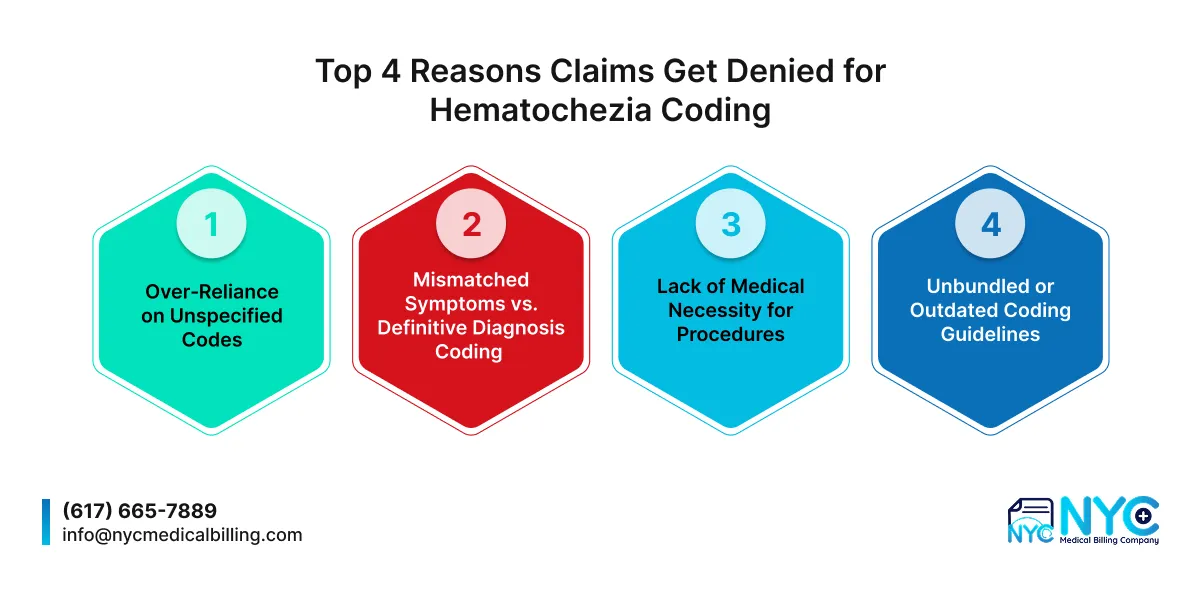
1-Over‑Reliance on Unspecified Codes
The use of ICD 10 code for gastrointestinal hemorrhage unspecified is deemed invalid when the results of colonoscopy or sigmoidoscopy have already been established. The overuse not only prompts payers to refuse the claim but also initiates an audit if your gastroenterology practice frequently uses it.
2-Mismatched Symptoms vs. Definitive Diagnosis Coding
The second common reason for denial is billing K92.2 with newly discovered lower gastrointestinal conditions without an appropriate primary-secondary sequencing method. Doing this violates the gastroenterology medical coding guidelines and confuses the insurance for which condition you have treated the patient.
3-Lack of Medical Necessity for Procedures
Vague or incomplete notes for diagnostic procedures like colonoscopy for evaluating the site of lower GI bleeding fail to develop the urgency required for performing this procedure. Medical necessity for colonoscopy ICD 10 code must link the CPT code, otherwise payers deny the claim.
4-Unbundled or Outdated Coding Guidelines
The fourth reason that causes unspecified GI bleed coding compliance violations is failure to add secondary diagnostic code required for risk adjustment. Beside this, using invalid or outdated ICD 10 code for lower GI bleeding leads to underpayments or denial, increasing days in AR.
Differential Diagnosis & Specific Coding Pathways
When gastrointestinal bleeding ICD 10 differential diagnosis reveals the original source of discomfort, it’s imperative to transition from K92.2 to more specific code. Doing this improves the GI billing claim rejection prevention strategies.
Quick Reference: Underlying Causes and Corresponding ICD-10 Codes
| Condition | Clinical Finding | ICD 10 Code |
| Diverticular Disease | Diverticulosis/Diverticulitis of large intestine with hemorrhage | K57.32 / K57.33 |
| Hemorrhoids | First- to fourth-degree or unspecified hemorrhoids | K64.0 – K64.9 |
| Angiodysplasia of Colon | Vascular malformations with active or documented hemorrhage | K55.21 |
| Ischemic Colitis | Acute vascular insufficiency of intestine | K55.0 |
| Inflammatory Bowel Disease | Crohn’s disease or Ulcerative colitis series | K50 – K51 |
Clinical Documentation Best Practices for Providers
Lower GI hemorrhage RCM best practices starts from the bedside. To eliminate the payer scrutiny and charting issues take these steps:
Key Details Clinicians Must Document
Your clinical documentation must include the following details:
Exact Visual Description
Your documentation must specify the stool sample color like bright red color, maroon, or melena to support invasive diagnostic procedures like colonoscopy.
Bleeding Parameters
Include details like the duration of onset, frequency, and the approximate volume of blood loss.
Systemic Manifestations
Must add the accompanying symptoms the patient is experiencing like hypotension, syncope and support it with acute blood loss anemia coding (D62).
Bridging CDI and RCM Operations
To bridge the gap between your RCM operations and documentations, deploy CDI templates for gastroenterology to capture the full details of the medical condition and proposed treatment. Standardized EHR templates help your coding and billing staff to make your claim bulletproof against payer scrutinies, improving workflow and reducing reimbursement cycle.
Conclusion
Mastering the ICD 10 code for Hematochezia requires precision and optimum compliance with payer reimbursement regulations. It is important to know that the code K92.2 stays valid until the cause of lower GI bleeding is unknown. When the diagnostic test like Colonoscopy or Sigmoidoscopy determines the real cause, transition to more specific code for accurate billing. Adding additional details like the location of bleeding site, frequency of symptoms, and blood volume loss help payers understand the medical decision making rationale.
Finally, when you bridge the gap between Clinical Documentation Improvement (CDI) and RCM operations, you make sure payers accept your claim at first submission. Making your revenue cycle operations flow seamless starts by meticulous documentation.
Start refining your coding strategy for maximum reimbursement. Contact NYC Medical Billing to improve your collections and billing workflow. Get your free practice revenue audit today.