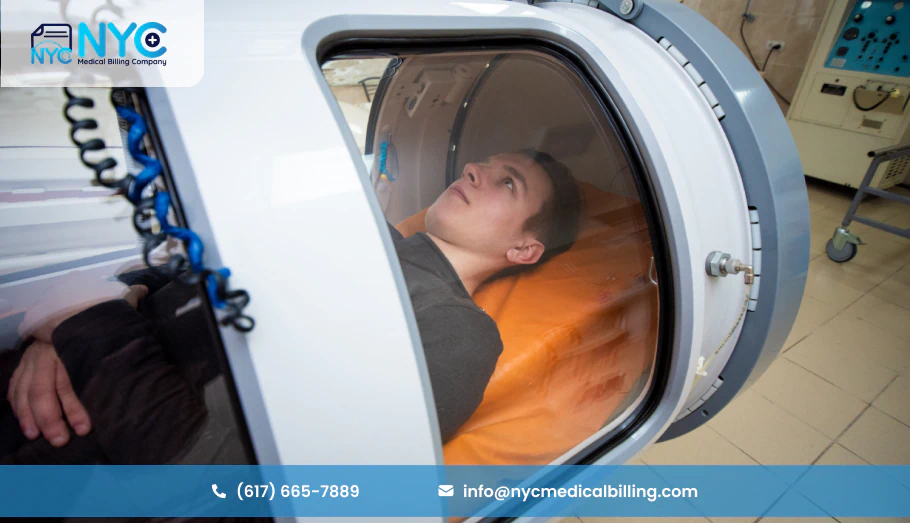
Suppose your body is in crisis, like tissue is dying, and antibiotics aren’t working. A wound refuses to heal after months of conventional care. In situations like these, one of medicine’s most powerful yet underutilized treatments is Hyperbaric Oxygen Therapy (HBOT) or pure oxygen to your blood to carry more healing fuel than it ever could under normal conditions.
Hyperbaric Oxygen Therapy (HBOT) isn’t science fiction. It’s FDA-regulated, Medicare-covered, and clinically proven for a growing list of serious conditions. If you are exploring treatment options, this guide covers everything you need to know.
What Is Hyperbaric Oxygen Therapy?
Hyperbaric Oxygen Therapy involves breathing 100% oxygen while resting in a large pressurized chamber. Air pressure inside the chamber is raised to up to two and a half times normal atmospheric pressure, which helps your lungs absorb more oxygen and move it from the blood to organs and tissues, promoting healing and treating various conditions.
Under normal atmospheric conditions, you breathe air that is roughly 21% oxygen. Inside an HBOT chamber, you breathe pure medical-grade oxygen, approximately 80% more oxygen per breath than ambient air.
How Pressure Changes Healing
The physics are straightforward: higher pressure forces oxygen to dissolve directly into blood plasma (not just into red blood cells), reaching areas where circulation is compromised, inflamed, or oxygen-deprived. This mechanism drives four critical biological processes:
- Angiogenesis — stimulation of new blood vessel growth
- Antimicrobial action — anaerobic bacteria cannot survive in high-oxygen environments
- Anti-inflammatory response — cytokine modulation reduces chronic inflammation
- Cellular regeneration — increased oxygen triggers stem cell mobilization and tissue repair
What a Session Looks Like
An average HBOT session lasts 90 minutes to two hours. Some conditions require just one session, while others involve repeated sessions over days or weeks. Patients may feel pressure in their ears while inside the chamber, similar to going up or down in an airplane.
Scientifically supported hyperbaric treatments are typically delivered at pressures between 1.9 and 3.0 atmospheres absolute (ATA).
FDA-Approved Conditions for HBOT (Official 2026 List)
Regulatory Authority and Approval Process
For an HBOT indication to be FDA-approved, there must be substantial clinical evidence showing that the treatment improves outcomes for a specific condition. The FDA began regulating hyperbaric oxygen chambers in 1976 and adopted rules for device use in 1979.
Hyperbaric oxygen chambers are Class II devices reviewed by the FDA under the 510(k) pre-market approval process, using indications approved by the UHMS Hyperbaric Oxygen Therapy Committee.
The 14 Medicare-Recognized Conditions
Medicare covers HBOT for 14 specific conditions under the National Coverage Determination (NCD 20.29). These approved indications include:
- Acute Carbon Monoxide Intoxication
- Decompression Illness, Gas Embolism
- Gas Gangrene
- Acute Traumatic Peripheral Ischemia
- Crush Injuries
- Suturing Of Severed Limbs
- Progressive Necrotizing Infections
- Acute Peripheral Arterial Insufficiency
- Preparation And Preservation Of Compromised Skin Grafts
- Chronic Refractory Osteomyelitis
- Osteoradionecrosis
- Soft Tissue Radionecrosis
- Cystitis
- Diabetic Wounds Of The Lower Extremities
Some of them are explained below
Diabetic Wounds of the Lower Extremities
This is one of the most common FDA-approved uses of HBOT in clinical practice. Chronic wounds that fail to heal, especially in patients with diabetes, are among the most common FDA-approved uses of HBOT. Hyperbaric oxygen therapy increases oxygen delivery to the wound site, stimulates angiogenesis, reduces swelling and infection risk, and accelerates healing. It is typically used as an adjunctive therapy alongside conventional wound care.
For diabetic wound coverage specifically, patients must meet Wagner grade III or higher classification and have failed an adequate course of standard wound therapy. Documentation must clearly establish these criteria before treatment initiation.
Carbon Monoxide Poisoning
Carbon monoxide binds to hemoglobin 200 times more powerfully than oxygen, starving organs of the fuel they need. HBOT rapidly reverses this by flooding the bloodstream with oxygen at pressure, displacing CO and preventing long-term neurological damage.
Decompression Sickness and Gas Embolism
Originally developed for deep-sea divers, HBOT remains the gold standard for treating decompression sickness (“the bends”) and arterial gas embolism, conditions where nitrogen bubbles form in the bloodstream and can be life-threatening without immediate intervention.
Necrotizing Infections and Gas Gangrene
For flesh-eating bacterial infections like necrotizing fasciitis, HBOT’s anti-bacterial action may make antibiotic treatments more effective, since anaerobic bacteria cannot survive in high-oxygen environments.
Radiation Tissue Damage (Osteoradionecrosis & Soft Tissue Radionecrosis)
Radiation therapy for cancer can lead to progressive damage in nearby healthy tissue — injury that may not appear until months or even years after treatment ends. HBOT is FDA-approved to treat these conditions by improving circulation, reducing inflammation, and stimulating tissue repair.
Chronic Refractory Osteomyelitis
Bone infections that fail to respond to conventional antibiotic and surgical management become candidates for HBOT. The elevated oxygen levels help neutralize resistant bacteria and stimulate bone healing processes.
What “Off-Label” Uses Mean
When a physician prescribes HBOT for a condition outside the 14 approved indications, it is called “off-label” use; it’s legal, but not covered by Medicare or most insurers. HBOT treats off-label conditions on a daily basis. When doctors use a medication off-label and find positive results, they trigger the beginning of medical research and clinical trials necessary to receive new FDA approval.
Is HBOT Safe?
For FDA-approved conditions at accredited facilities, HBOT has a strong safety record. Complications of HBOT are uncommon but can include ear and sinus pain, rupture of the eardrum, temporary vision changes, and lung collapse.
High concentrations of oxygen also carry fire risk. For this reason, the FDA advises getting HBOT treatment at a hospital or facility that has been inspected and is accredited by the Undersea and Hyperbaric Medical Society (UHMS).
Who Should Not Receive HBOT
Absolute contraindications include an untreated pneumothorax. Relative contraindications — which require physician evaluation — include certain medications (such as disulfiram), history of thoracic surgery, severe claustrophobia, uncontrolled high fever, and active upper respiratory infections.
Medicare and Insurance Coverage for HBOT
Let’s see which part of Medicare covers HBOT:
Medicare Part B Coverage
Medicare Part B may cover HBOT for qualifying patients in a pressurized chamber for approved conditions, including:
- Chronic refractory osteomyelitis
- Soft tissue radionecrosis
- Osteoradionecrosis as an adjunct to conventional treatment
- Actinomycosis occurs only when the disease is not responsive to antibiotics and surgical treatment
Insurance generally does not cover non-covered conditions. In either case, insurance will most likely cover the consultation visit, regardless of condition.
HBOT Medical Billing and Coding
HBOT billing is among the most documentation-intensive areas in outpatient medical billing. Errors in coding, supervision documentation, or prior authorization can result in complete claim denial, even when the service was clinically appropriate.
CPT and HCPCS Codes for HBOT
There are two key billing components:
- First, physician supervision is billed with CPT code 99183 (for non-outpatient providers) or HCPCS code C1300 (for outpatient providers).
- Second, the actual HBOT treatment is billed with HCPCS code G0277 in 30-minute increments.
CPT 99183: Physician or qualified healthcare professional attendance and supervision of hyperbaric oxygen therapy, per session, covers the physician’s direct supervision during treatment.
CPT 99183 with modifier 52: It is used when supervision time is reduced due to multiple patients being treated simultaneously in a multiplace chamber.
Place of service codes also matter: facility-based HBOT typically uses POS 22 (outpatient hospital) or POS 24 (ambulatory surgical center), while freestanding clinics use POS 11 (office).
ICD-10 Coding for Diabetic Wound Claims
For HBOT to be considered medically necessary for diabetic wounds, one of the required diabetes diagnosis codes plus one of the required wound diagnosis codes must be used together—for example, E11.621 (Type 2 diabetes with foot ulcer) paired with the appropriate wound code.
Medicare Treatment Limits
Medicare has Medically Unlikely Edits (MUEs) in place for HBOT, limiting daily billing to five 30-minute units. If exceeding this limit is medically necessary, detailed documentation supporting the extended treatment duration is crucial for successful appeals.
Medicare typically covers 30–40 treatments for diabetic wounds, but may allow more with additional documentation. Track treatment counts carefully and submit additional documentation for extended courses before claims submission.
Top Reasons HBOT Claims Are Denied
Medical necessity denials occur when documentation fails to establish that the patient meets coverage criteria. Frequency limitation denials happen when claims exceed the allowed number of treatments per diagnosis. Incorrect diagnosis coding leads to automatic denials when the ICD-10 code doesn’t match an approved indication.
The solution in each case is the same: rigorous upfront documentation, precise coding, and proactive prior authorization management.
Prior Authorization Requirements
Prior authorization for HBOT typically takes 7–14 business days, though timelines vary by insurance carrier. Most insurance plans require prior authorization before initiating HBOT, involving the submission of clinical documentation, treatment plans, and physician orders well in advance.
Documentation Standards That Protect Reimbursement
Every HBOT claim must capture:
- Treatment pressure (ATA) and oxygen concentration
- Total session duration
- Patient tolerance, vital signs, and observed response
- Wound measurements with Wagner classification (for diabetic wounds)
- Evidence of failed prior conservative treatment (minimum 30 days for wound cases)
- Physician’s explicit medical necessity rationale
HBOT services have been subject to Office of Inspector General (OIG) scrutiny due to historical overutilization and improper billing. Regular internal audits, alignment with LCD requirements, and annual payer policy reviews are essential compliance safeguards.
Commercial Payer Considerations
Insurance carriers approve HBOT only for specific FDA-approved indications. Off-label uses frequently face denial unless extensive documentation supports exceptional circumstances. Commercial payers often have more restrictive policies than Medicare.
Choosing an Accredited HBOT Facility
The FDA explicitly recommends seeking treatment only at facilities accredited by the Undersea and Hyperbaric Medical Society (UHMS). When evaluating a hyperbaric center, confirm:
- UHMS accreditation status
- Board-certified hyperbaric physician on-site
- Monoplace or multiplace chamber appropriate for your condition
- Compliance with local Medicare LCD requirements for your jurisdiction
- Transparent billing practices with upfront prior authorization support
Conclusion
Hyperbaric Oxygen Therapy is one of modern medicine’s most evidence-backed, yet administratively demanding, treatments. The science is clear: for the 14 FDA-approved conditions, HBOT delivers measurable healing benefits that conventional treatment alone cannot achieve.
The clinical case is strong. The regulatory framework is established. But the billing infrastructure required to sustain an HBOT program is where many providers fall short.
If your practice offers Hyperbaric Oxygen Therapy and you’re struggling with claim denials, documentation gaps, prior authorization delays, or OIG compliance concerns, NYC medical billing is your specialized partner.
Frequently Asked Questions
What are the potential side effects of hyperbaric oxygen therapy?
Hyperbaric Oxygen Therapy (HBOT) side effects are usually mild and temporary, often related to pressure changes (ear/sinus pain, temporary nearsightedness) or high oxygen levels (fatigue, low blood sugar, rare seizures), with claustrophobia also common in confined chambers, but more serious complications like lung damage or oxygen toxicity are rare with proper protocols.
What is the typical pressure used in hyperbaric oxygen therapy?
Typical hyperbaric oxygen therapy (HBOT) uses pressures between 2.0 and 3.0 Atmospheres Absolute (ATA), with many treatments occurring around 2.0-2.8 ATA, where patients breathe 100% oxygen in a pressurized chamber,
What are the different types of hyperbaric chambers?
Hyperbaric oxygen therapy uses two types of chambers:
- Monoplace chamber. This is a chamber built for one person. It’s a long, plastic tube that looks like an MRI machine. The patient slips into the chamber. …
- Multiplace chamber. This chamber, or room, can fit two or more people at once. The treatment is largely the same.